On Tuesday, 22 September, I was in hospital on IV antibiotics. A couple of days later I made it to London for the first-ever Charity Film Festival run by The Saltways. And I’m so glad I did.
Even though my body was not up for a full day, I was there for most of it. These are some reflections and takeaways from the sessions I attended.
As soon as I arrived at Rich Mix in Shoreditch, London, I felt welcomed. It was a really uplifting, relaxed and inspiring vibe. Not overly regimented or clinical in how it was run; just friendly, efficient and good.
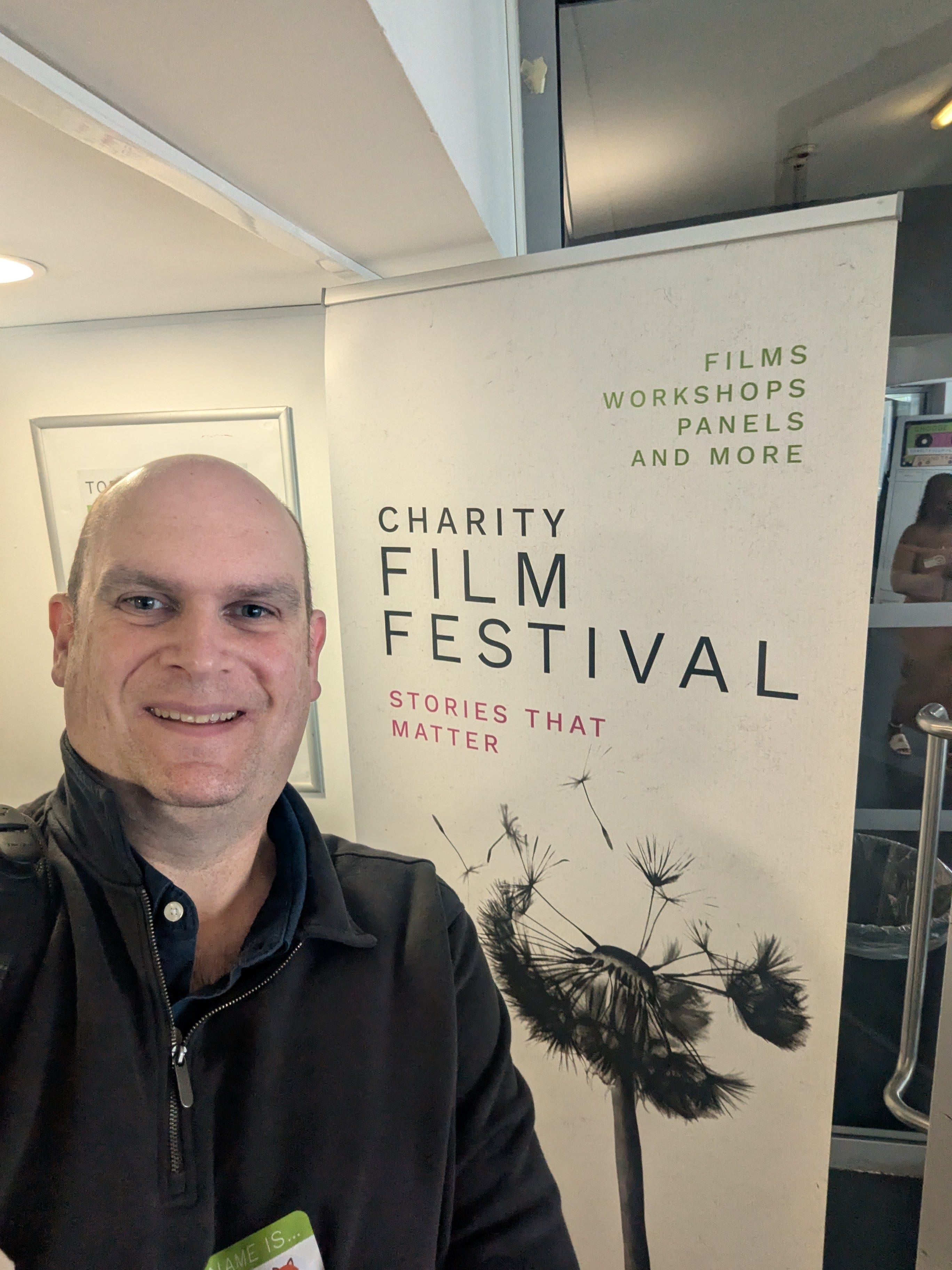
At the sign-in desk we were asked to pick an animal sticker to put on our name badges and take a piece of paper with a random fact about that animal. And, do you know what? That was just so helpful; whether you’re an introvert or an extravert, a neurotypical hero or a bit super spicy-brained like me – it’s an acknowledgement that this was a safe place and most people struggle to start conversations at these sorts of events.
I sat down in the main theatre area and started chatting to a guy called Sean Ramiz from Northstar Politics. It was good to hear about what he does with Plinth, a CRM to help charities measure and track how the people they work with are being supported.
Within a few minutes, Emma (founder of The Saltways) asked us to join together in making the noise of the animal on the sticker we’d picked earlier. Ha! I did not know what noise foxes make. Well, I do, but I was not going to try. Maybe after my coffee.
The opening keynote was from Paul de Gregorio, Founder of Rally, speaking about “Fightback with Film.”
It was centred on the video and social media tactics of the far right in the UK and how we as charity communicators can learn from their approach and how that should inform our own comms. He highlighted how charities/nonprofits are often too busy focusing on optimising for engagement, while the far-right are strategising for influence…and in many ways winning, sadly.
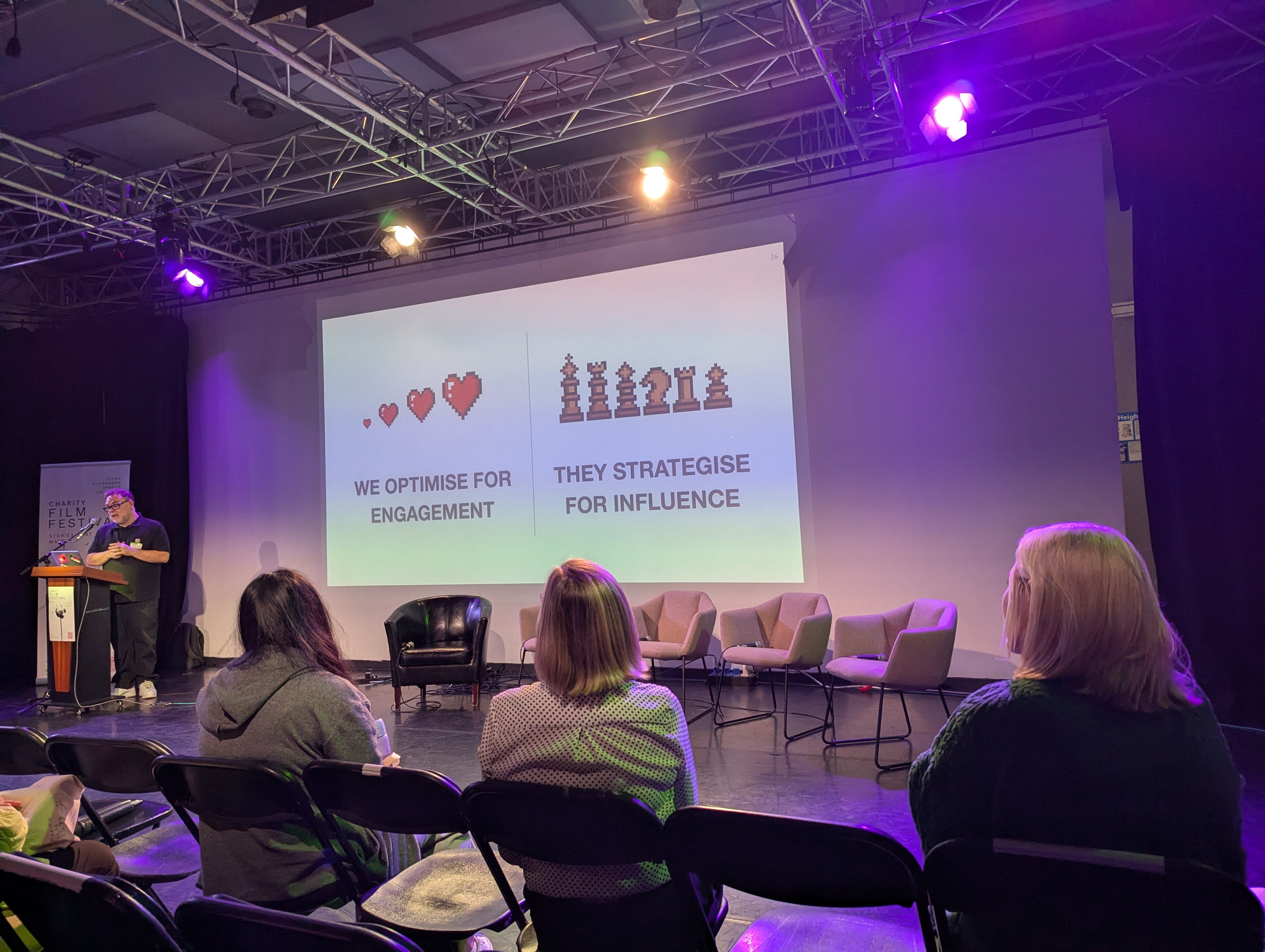
The far-right typically go quick and direct, using simple messages and speaking to the everyday person. They’re not waiting for multiple layers of sign off, they are right there, quicker than most. This is crucial. The faster you respond, the better chance you have to pique the interest of algorithms (with all the usual caveats to every social media tactic applied).
Another crucial thing is the simplicity of the message.
Paul helpfully reminded us of the power of a simple message, slogan, or motif in unifying people around a cause. Case study: MAGA (Make America Great Again)
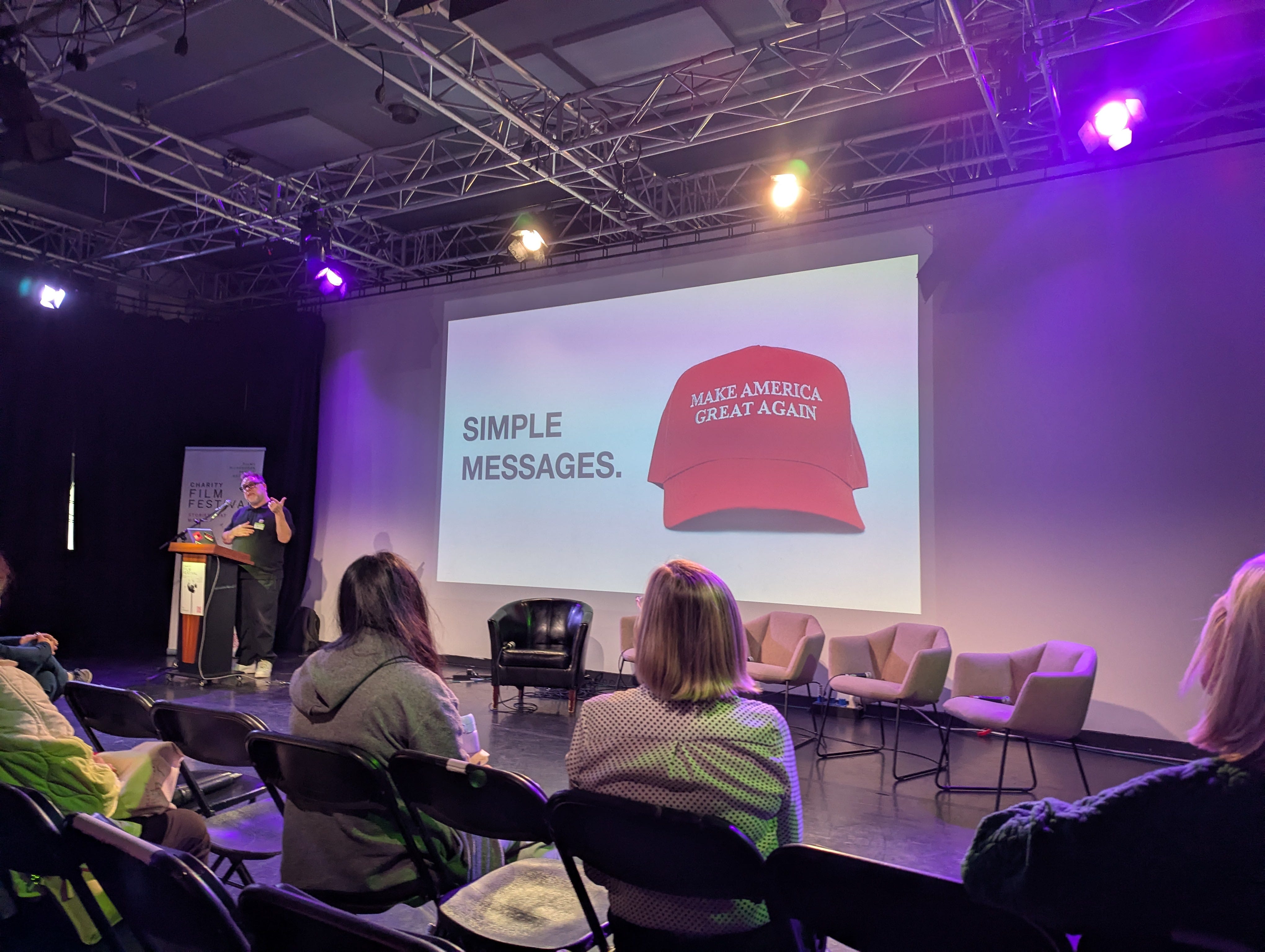
For charity communicators this means: what do you need to have in place to be ready to be quick?
Design templates
Rapid sign-off processes agreed beforehand
Ways to scan social channels
Identify people who can speak in front of camera
Work with specific social media channel protocols (eg. aspect ratios), and don’t wait for ‘perfect and polished’.
Make sure your audio is clear and the messages are quick to understand
Main takeaways
All of Paul’s advice was transferable for everyone engaging on social media today. Be ready, be quick, be simple.
To get and keep people on board with your campaign, you need a clear and simple message. It was a great ‘oh yeah!’ moment when we were reminded how simple and effective the MAGA slogan is.
I also wondered…
… if Paul’s talk related more to advocacy-focused charities rather than membership organisations or ‘fundraising-for-practical-needs’ charities? From what Paul was saying, it seemed that it’s assumed that ALL people who work in charities/nonprofits are left-wing and liberal in their worldviews. That was what I inferred.
And to that assumption, I would say yes, probably the majority. But it’s far more nuanced than that. I reckon most people have a range of views – with a surprising number of views that aren’t in complete polar opposition to the far-right but dotted along a zig-zaggy line. A topic to discuss another day!
For the rest of the morning, I went to two panel discussions.
In the first, Finding your voice: making campaign films people remember we heard from Emily Semmens, Praxis; Evie Wright, Media Trust; Muslim Women’s Network Charity, and Paul de Gregorio, Rally.
I didn’t take many notes from this one, but a golden moment was during the Muslim Women’s Network UK film we watched called That Little Voice (produced with the Media Trust).
It’s scripted so well. And it has some lovely lines that catch you off guard, all while carrying a very sensitive and important message about how many Muslim women are treated badly in public spaces.
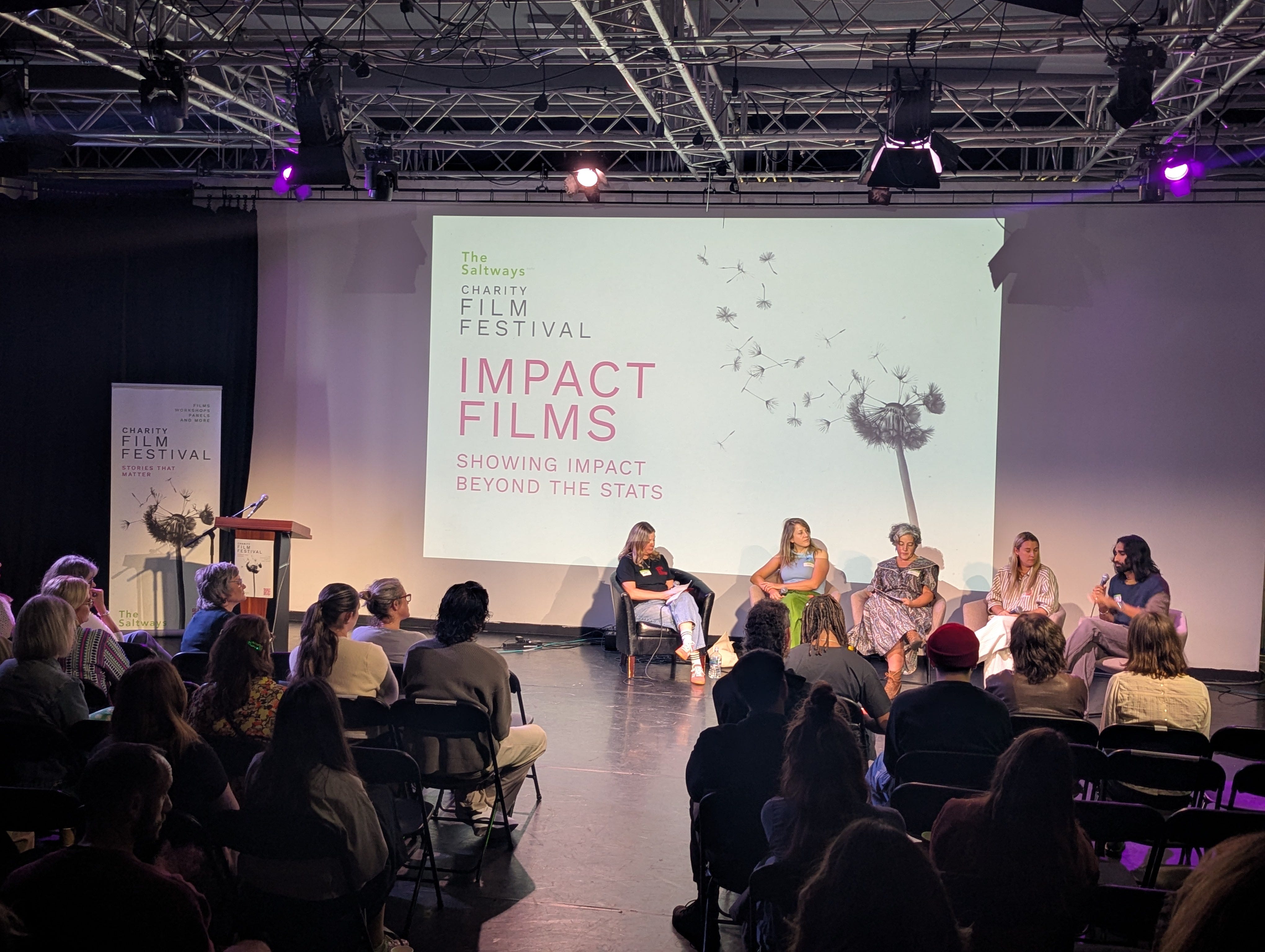
In the second panel discussion Impact films: Showing impact beyond the stats, Louise Dawtry hosted with Michaela Lowe, Media Trust; Read For Good Charity; Rebecca Lordan, Active Prospects; Sean Ramiz, Northstar Politics/Plinth on the panel.
We heard about the importance of not stifling people’s agency in your films, including in the call to action. Don’t just talk about them. No one is to be observed from on high. We’re all in this together.
As I was watching the start of this Read for Good film called The Magic Of Stories (also produced with the Media Trust), I immediately noticed the high production quality, but also a pretty typical downbeat charity video story arc forming.
At 00:29 I was just about to sigh a little inside, because this narrative approach is so well worn.
But…
…just a split second later, the sombre, hospital narrative and emotive music were abruptly broken.
“Do dodo do do dooooo!”
A Storyteller from Read for Good entered the room, sounding like she was driving a train.
It was a narrative trick that makes me, as someone who works in this field, applaud the filmmakers.
Then we watched a truly moving video from the charity Active Prospects.
I loved how they used emotive interview sections and combined this with helpful detail and what they did as a charity.
“He feels safe” is such a golden line, which I’m presuming is right at the heart of their brand ethos.
We heard how the producers had not stuck to a set of rigid questions but led with curiosity. They let people tell their story. Brilliant.
I also like how the voiced CTA was not a VO artist; it was someone who had been interviewed in the video. That worked really well.
And finally, they backed it all up with stats at the end of the video. Very well and appropriately structured, I thought.
Main takeaways
Well-scripted videos, with good actors and tight editing, can cut through the well-worn, somewhat tired story arc films many of us are used to producing. (I’m definitely reflecting more on this)
Surprise people with visuals and sound. Like the storytelling lady arriving and completely changing the sombre atmosphere. It’s a filmmaking device that can showcase your brand essence in more ways than you think.
While many people insist we all suffer from shorter attention spans, slower, longer-form impact videos are still an important vehicle to share the heart of what your charity is about and why that matters.
It’s really important to consider the structure of a case study film. Don’t lead with the what. It’s not usually that much of a hook. People are interested in people, and stories of overcoming adversity are incredibly compelling.
Lead with curiosity.
After this rollercoaster of emotions and learnings, I enjoyed a few slices of incredible pizza and chatted with some nice people about what we’d all enjoyed so far.
Sadly, I didn’t stay for the awards part of the day, as I was really struggling with the effects of heavy antibiotics at this point!
But I’m looking forward to the next Charity Film Festival, and I will hopefully be in much better health.